The best cleanroom wipe supplier is not the one with the lowest price. It is the supplier that can prove product suitability, control every production batch, and keep the same quality after mass production. Buyers should compare application fit, test evidence, manufacturing control, traceability, and total cost-not appearance or quotation alone.
Start With the Application
A cleanroom wipe is not suitable simply because it is labeled "ISO Class 5" or "low lint." ISO 14644-1 classifies the cleanliness of air by airborne particle concentration. It does not certify that a specific wipe is suitable for every process.
The first step is to define how the wipe will be used. Record the cleanroom class, surface type, cleaning chemical, wiping method, and acceptable contamination level. A wipe for general equipment cleaning may not be suitable for wafer handling, pharmaceutical filling, medical-device assembly, or optical cleaning.
The buyer should answer several basic questions:
- Will the wipe be used dry or pre-wetted?
- Will it contact a product surface?
- Is it used with alcohol, acetone, IPA, or another solvent?
- Is absorbency more important than particle control?
- Could the surface be scratched or marked?
- Is low bioburden enough, or is sterility required?
- What level of particle, fiber, ion, and chemical residue is acceptable?
ISO 14644-18:2023 recommends assessing cleanroom consumables according to product and process requirements, cleanliness attributes, and functional performance. It considers contamination from particles, chemicals, and microorganisms.
Verify the Supplier First
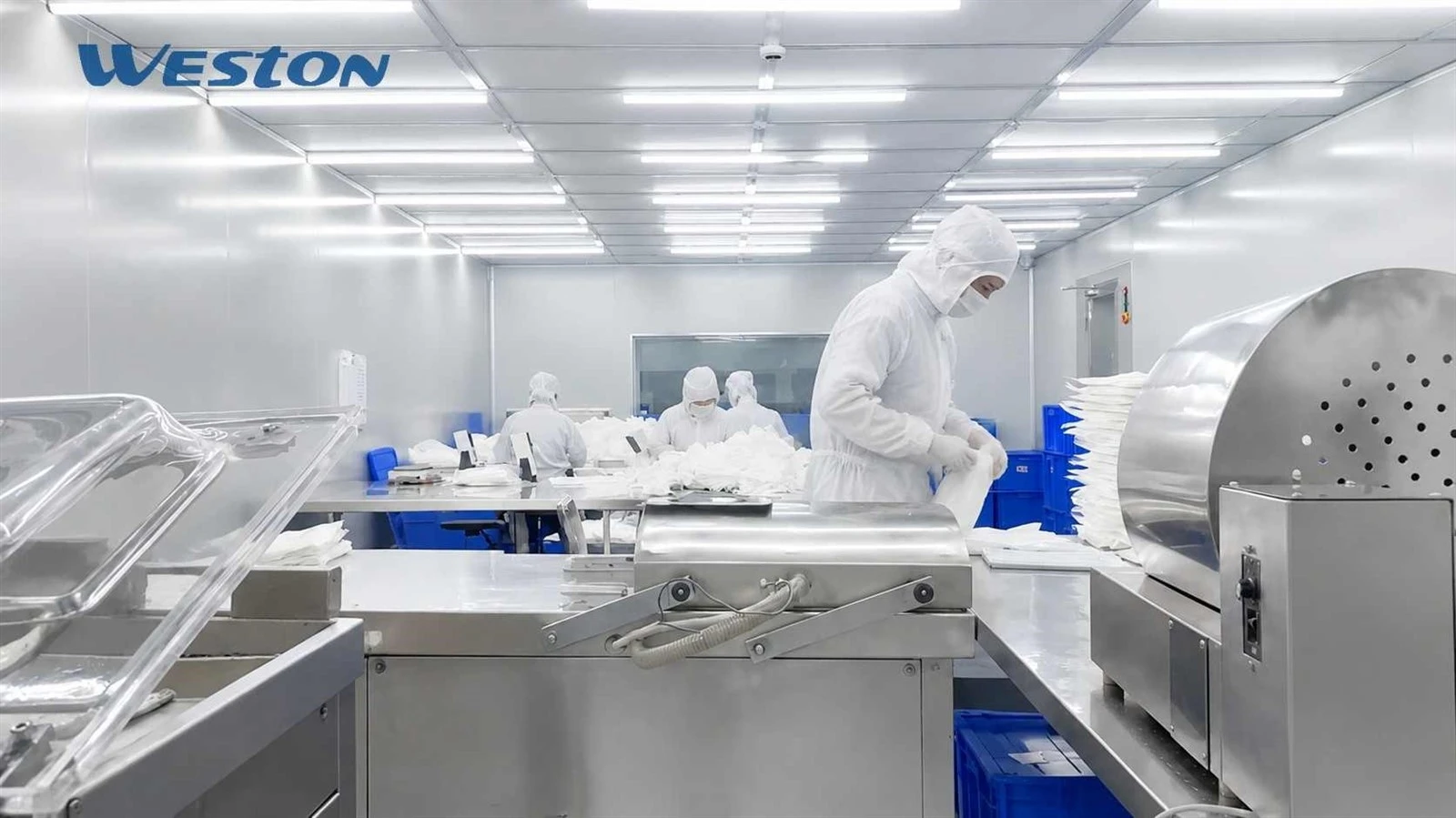
Before comparing wipe samples, determine what type of company you are dealing with. A Chinese supplier may be a direct manufacturer, a trading company, or a company that manages some processes and outsources others. None of these models is automatically unacceptable. The important issue is process control.
Ask the supplier who controls:
- Fabric sourcing.
- Cutting.
- Edge sealing.
- Laundering.
- Inspection.
- Packaging.
- Testing.
- Batch release.
Request the legal company name, factory address, production process, equipment information, quality certificates, and export experience in your industry. A supplier that cannot clearly explain its production chain may not control the final product.
Do not confuse a clean factory with a clean finished wipe. A supplier may operate in a controlled facility, yet the wipe may still contain excessive particles, detergent residues, ions, or packaging debris. The final product must be evaluated through product-specific evidence.
A technically capable supplier should also ask about your application. It should discuss surface sensitivity, solvent compatibility, absorbency, particle release, edge construction, and packaging. If the supplier only repeats "high quality," "ISO certified," or "best price," its technical capability remains unproven.
Compare Construction, Not Names
Two wipes made from "100% polyester" may perform very differently. Yarn type, knit density, fabric structure, edge treatment, laundering, and packaging all affect performance.
Continuous-filament polyester is widely used because it can offer low particle release and good durability. Polyester-cellulose blends may provide stronger absorbency and lower cost, but their fiber behavior must be checked. Polyester-nylon microfiber can offer fine cleaning and liquid pickup, but chemical compatibility and extractables require closer review.
Compare the actual construction:
- Knitted or woven fabric.
- Filament type.
- Fabric weight.
- Thickness.
- Knit density.
- Edge-sealing method.
- Dimensional tolerance.
- Folding method.
- Packaging count.
Edge quality is especially important. Laser-sealed, ultrasonic-sealed, hot-cut, and sewn edges do not behave in the same way. A weak edge can shed fibers during wiping. A hard edge can scratch a delicate surface. Ask whether the supplier tests edge release and whether edge quality remains stable after laundering.
Size also matters. A wipe that is slightly smaller may increase consumption. A thicker wipe may absorb more liquid but leave a different level of residue. Do not approve a product by visual similarity alone.

Check the Test Evidence
A supplier's test report must identify the exact product being quoted. Review the model number, material, dimensions, edge type, packaging, test date, lot number, laboratory, and test method.
IEST-RP-CC004 is a recognized recommended practice for evaluating wipers used in cleanrooms and other controlled environments. It covers characteristics related to cleanliness and function.
For particle-release data, ask:
- Which standard and revision were used?
- What particle sizes were measured?
- How many wipes were tested?
- What agitation or tumbling conditions applied?
- What are the units?
- Was the sample from a normal production lot?
Do not compare two particle results if the methods are different. A number without its test conditions has limited value.
Chemical cleanliness is another major concern. Request data for non-volatile residue, ionic contamination, pH, and relevant extractables. Depending on the process, sodium, potassium, chloride, total organic carbon, or solvent residues may matter. Low lint does not mean low chemical contamination.
For biological applications, distinguish between laundered, low-bioburden, sterilized, and sterile wipes. "Cleanroom packed" does not mean sterile. Ask for sterilization information, packaging integrity data, shelf-life support, and microbiological test results when required.
Test Consistency, Not One Sample
A good sample does not prove stable mass production. Suppliers may use different materials, laundry settings, subcontractors, or inspection standards after the first order. The real question is whether the supplier can reproduce the same result across multiple lots.
Review the supplier's quality system. It should include incoming-material inspection, documented laundering controls, environmental monitoring, final inspection, nonconformance handling, corrective action, and change control.
Lot traceability should connect the finished wipes to the fabric lot, laundry batch, production date, inspection record, and shipment. If a contamination problem appears, traceability allows the buyer to isolate the affected lot instead of stopping all operations.
Ask how the supplier controls changes to fabric, yarn, detergent, laundry location, edge sealing, packaging, and sterilization. Major changes should require notification and, where necessary, requalification.
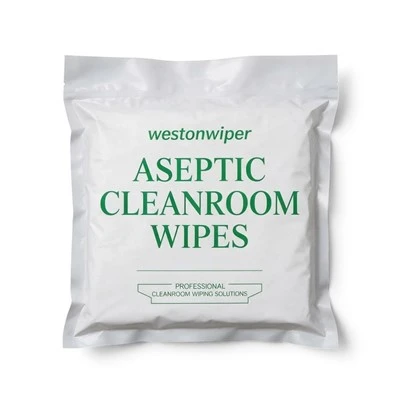
WestonWiper cleanroom wipes, for example, can be considered within the same disciplined comparison process: the buyer should still review the exact model, test method, lot information, and application suitability rather than relying only on the brand name.
Calculate the Real Cost
Unit price is only one part of the purchase decision. A cheap wipe may increase labor time, chemical use, consumption, waste, reinspection, or production risk.
A more useful model is:
Total Cost = Purchase Cost + Freight + Inspection + Operator Time + Chemical Cost + Waste + Failure Risk
Compare cost per usable wipe, cost per cleaned surface area, and annual cost at actual consumption. Also review minimum order quantity, lead time, production capacity, emergency supply, packaging options, and response time for complaints.
Use a Controlled Qualification
First, screen suppliers through documents. Remove suppliers that cannot provide clear specifications, complete test reports, traceability, and realistic production information.
Next, compare samples under identical conditions. Use the same surface, chemical, wiping pattern, operator instructions, and observation period. Record particle residue, streaks, absorbency, tearing, odor, surface damage, and packaging performance.
Then conduct a pilot trial using wipes from a normal production lot. Test them in the intended cleanroom zone. Monitor consumption, operator handling, contamination indicators, and process results across different shifts.
Before commercial approval, establish a written specification. Include material, size, edge, packaging, testing, lot release, change notification, complaint response, and replacement requirements.
The safest supplier is the one that provides clear evidence, stable production, honest limitations, and strong traceability. Compare suppliers by risk-adjusted performance. A cleanroom wipe is not merely a disposable cloth. It is part of the contamination-control system.