Dry Room Cleaning: Key Considerations for Battery Manufacturing Facilities
Dry room cleaning is an essential part of contamination control in lithium-ion battery manufacturing. Unlike conventional industrial cleaning, it must address three important factors simultaneously: moisture control, particle contamination and electrostatic risks. Cleaning materials, equipment maintenance methods and personnel practices must all be compatible with the dry room's environmental requirements.
As battery manufacturers increasingly adopt controlled production environments, choosing suitable cleaning materials and establishing consistent cleaning procedures have become important for maintaining production conditions. Understanding how to clean a battery dry room without introducing unwanted moisture or particles helps manufacturers protect sensitive materials and maintain process consistency.
1. Why Is Dry Room Cleaning Important in Battery Manufacturing?
A battery dry room is a controlled production environment designed to maintain very low moisture levels. It is commonly used in lithium-ion battery manufacturing processes where moisture-sensitive materials are handled, including electrode production and battery cell assembly.
Moisture control is particularly important because water can react with certain battery materials and electrolyte components. Uncontrolled moisture exposure may affect material properties, manufacturing consistency and battery performance.
However, maintaining a low dew point is only one part of contamination control. Dust, fibers, metallic particles and residues can also accumulate on production equipment, workstations and floors.
A suitable dry room cleaning program therefore needs to address:
- Moisture control: Avoid introducing water or unapproved liquid cleaning agents into controlled areas.
- Particle control: Reduce dust, loose fibers and other particles around production equipment.
- Electrostatic control: Manage static-related risks in areas where sensitive components or processes require ESD protection.
- Cross-contamination prevention: Prevent contaminants from being transferred between production zones through cleaning tools, packaging or personnel.
The goal is not simply to make the production area look clean. It is to maintain environmental and surface conditions that are compatible with the manufacturing process.

2. Common Contamination Risks in Battery Dry Rooms
Battery dry rooms face several contamination challenges. Some originate from production equipment, while others are introduced through cleaning operations, packaging or personnel movement.
2.1 Moisture Introduced During Cleaning
Moisture is one of the most important factors to consider when cleaning a battery dry room.
Traditional cleaning methods may involve water, liquid detergents or wet mopping. These methods can introduce additional moisture into an environment designed to maintain a low dew point.
Potential moisture sources include:
- Water-based cleaning solutions used without process approval.
- Damp cleaning cloths or inadequately dried cleaning tools.
- Cleaning materials with unsuitable moisture characteristics.
- Packaging that has not been evaluated for dry room entry.
- Moisture transferred by personnel or equipment during material movement.
Manufacturers should establish approved cleaning methods for each production area. Where dry cleaning is required, suitable dry wipes and other approved tools can help remove accessible dust and residue without relying on water-based cleaning methods.
It is also important to remember that a product described as a dry wipe is not automatically suitable for every ultra-low-humidity environment. Its moisture content, packaging and compatibility with the facility's requirements should be evaluated before use.
2.2 Dust and Loose Fiber Contamination
Dust and loose fibers can accumulate around coating equipment, rollers, slitting machines, control panels and operator workstations.
Cleaning materials themselves may also become a source of contamination if they release excessive fibers or particles during use.
Common sources include:
- Fibers released from unsuitable wiping materials.
- Dust accumulated on equipment surfaces.
- Particles transferred from garments and gloves.
- Debris generated during equipment maintenance.
- Contamination introduced through packaging and material handling.
For this reason, wiping materials should be selected according to their particle and lint characteristics, construction and intended cleaning application.
2.3 Electrostatic Discharge (ESD)
Electrostatic control is another important consideration in battery manufacturing.
Low-humidity environments can make static charge generation and dissipation more challenging. Static electricity may attract airborne particles to surfaces and create electrostatic risks for sensitive electronic components or designated manufacturing operations.
An effective ESD control program may include:
Appropriate grounding and personnel grounding systems.
ESD-compatible garments and gloves where required.
Suitable anti-static cleaning materials.
Regular verification of ESD control measures.
Procedures for handling sensitive components.
Anti-static wipes and ESD gloves can support these procedures, but they should not replace a complete facility-level ESD control system.
2.4 Cross-Contamination Between Production Areas
Different battery manufacturing stages have different contamination-control requirements. Using the same cleaning tools across multiple zones may transfer particles, residues or other unwanted materials.
For example, cleaning equipment around electrode coating machinery may involve different considerations from cleaning an assembly workstation or a designated electrolyte filling area.
Facilities should define separate cleaning tools, storage arrangements and procedures where necessary. This helps prevent contaminants from moving between production zones.
3. Key Areas That Require Regular Cleaning
Not every area in a battery manufacturing facility has identical cleaning requirements. The cleaning method should be determined by the production process, equipment design and environmental conditions.
|
Production Area |
Common Contamination Concerns |
Cleaning Considerations |
|
Electrode Coating Equipment |
Dust, accessible process residue and particles |
Clean approved equipment surfaces and maintenance areas |
|
Calendaring Equipment |
Particles and debris around rollers and machinery |
Maintain accessible machine surfaces and surrounding workstations |
|
Electrode Slitting Equipment |
Cutting debris and metallic particles |
Follow equipment-specific procedures for debris removal |
|
Battery Cell Assembly |
Particles around assembly workstations and handling areas |
Use approved cleaning materials and controlled handling procedures |
|
Electrolyte Filling Areas |
Moisture and contamination risks |
Follow strict process-specific cleaning and material-entry requirements |
|
Dry Room Floors and Workstations |
Dust and particles transferred by personnel |
Use approved dry cleaning methods and dedicated tools |
Cleaning Equipment Around Electrode Production Lines
During electrode coating, calendaring and slitting, dust and process debris may accumulate around accessible equipment surfaces and maintenance areas.
Routine cleaning can help prevent particles from building up around machine housings, control panels and workstations. However, exposed electrode coatings and active materials require separately approved cleaning procedures. General-purpose wipes should not be applied directly to these sensitive surfaces without compatibility verification.
Cleaning Battery Cell Assembly Areas
Battery cell assembly involves sensitive components and controlled handling procedures. Particles introduced through personnel, equipment or cleaning materials may create contamination concerns.
Cleaning should focus on approved equipment surfaces, designated workstations and surrounding areas. The use of suitable wipes, gloves and cleanroom garments can support contamination-control procedures.

Maintaining Floors and Workstations
Floors and workstations are important parts of the overall contamination-control system. Dust may be transferred through footwear, material movement and routine operator activities.
Dedicated cleaning tools and appropriate cleaning frequencies help reduce the accumulation and transfer of particles. The selected floor-cleaning method must also comply with the area's moisture restrictions.
4. How to Clean a Battery Dry Room Without Compromising Moisture Control
An effective dry room cleaning procedure should remove contamination without introducing new moisture or transferring particles to other areas.
4.1 Prioritize Approved Dry Cleaning Methods
Where the facility requires dry cleaning, suitable dry wipes, dedicated cleaning tools and approved vacuum systems may be used for appropriate surfaces.
Water and liquid cleaning agents should not be introduced unless the facility's cleaning procedure specifically permits them.
Before selecting a method, manufacturers should consider:
- The area's required dew point.
- The type of surface being cleaned.
- The nature of the contamination.
- Whether the cleaning material is compatible with the process
Whether the method may introduce moisture or leave residue.
4.2 Select Cleaning Materials Carefully
Cleaning materials can affect both moisture and particle control.
When evaluating wipes for battery dry rooms, manufacturers should consider:
Moisture characteristics: Check whether the material's moisture content is suitable for the intended environment.
Lint and particle release: Evaluate whether the wipe can introduce fibers or particles during use.
Packaging: Confirm that the packaging is suitable for the facility's material-entry and storage procedures.
Chemical compatibility: If cleaning agents are involved, verify that they are approved for the surface and production area.
ESD requirements: Where static control is necessary, check the product's verified electrical properties.
4.3 Establish Controlled Cleaning Procedures
A consistent procedure helps ensure that cleaning activities do not create additional contamination risks.
A practical procedure may include:
Identify the approved cleaning area and surfaces.
Confirm the cleaning method and required materials.
Prepare dedicated cleaning tools for the designated zone.
Clean accessible surfaces according to the approved wiping direction and sequence.
Avoid transferring used materials between different production areas.
Collect and dispose of used wipes according to facility procedures.
Inspect the cleaned area and complete the required cleaning records.
4.4 Verify Cleaning Results
Visual inspection is useful for identifying obvious dust, debris and residue, but it does not replace environmental monitoring.
Depending on the facility's requirements, verification may include:
- Dew point or moisture monitoring.
- Airborne particle monitoring.
- Surface contamination checks.
- ESD performance checks.
- Cleaning records and routine inspections.
The appropriate verification method should be established according to the production process and quality management requirements.
Frequently Asked Questions About Battery Dry Room Cleaning
What is the difference between a cleanroom and a battery dry room?
A cleanroom primarily controls airborne particles and other forms of contamination. A dry room focuses on maintaining very low moisture levels, often measured through dew point. Some battery manufacturing areas require both particle and moisture control.
Can water be used to clean a battery dry room?
Water should not be used unless it is specifically permitted by the facility's cleaning procedures. In low-humidity environments, water-based cleaning can introduce unwanted moisture and increase the burden on environmental control systems.
Are dry wipes suitable for battery dry room cleaning?
Dry wipes can be suitable for designated cleaning tasks, but their suitability depends on moisture content, particle release, packaging and surface compatibility. A product should be evaluated against the requirements of the intended production area before use.
Can anti-static wipes be used in low-humidity environments?
They may be considered where ESD control is required. However, manufacturers should verify surface resistance, static decay performance and other relevant product characteristics rather than assuming that every anti-static wipe is suitable for low-humidity conditions.
How often should a battery dry room be cleaned?
There is no universal cleaning frequency for every battery dry room. The schedule should be based on production activity, contamination monitoring, equipment maintenance needs, environmental requirements and facility-specific SOPs.
What should manufacturers check before introducing wipes into a dry room?
Manufacturers should review moisture characteristics, lint and particle release, packaging, material compatibility and any required ESD performance. Trial evaluations and process approval may also be necessary before routine use.
Choosing the Right Cleaning Materials for Battery Manufacturing
Effective dry room cleaning depends on more than selecting a low-lint wipe. Manufacturers need to consider moisture control, particle contamination, static electricity, packaging and the specific requirements of each production area.
The most suitable cleaning material is the one that meets the facility's verified process requirements without introducing additional contamination risks.
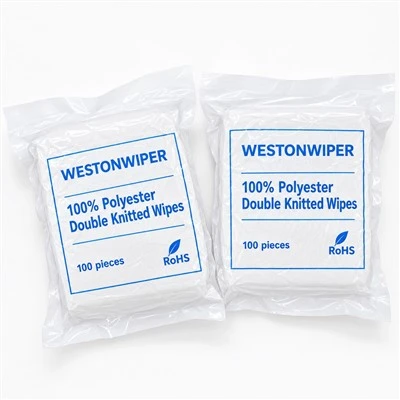
WestonWiper supplies cleanroom wipes, swabs, ESD gloves and cleanroom garments for controlled manufacturing environments. With factory customization options, WestonWiper can discuss wipe dimensions, materials, packaging and other product requirements with battery manufacturers and industrial buyers.
For companies evaluating a Disposable Cleanroom Wipes range or looking for a reliable Polyester Cleanroom Wipe supplier, product specifications and application suitability should always be assessed before selection.