


Cleanroom Products & Solutions for Wafer Fabrication
Wafer fabrication requires careful contamination control throughout semiconductor manufacturing. Particles, fibers, chemical residues, and contamination introduced through materials or personnel can affect sensitive manufacturing processes. Cleanroom products must therefore be selected according to the specific production area, cleaning task, and process requirements.
WestonWiper provides a range of cleanroom consumables, including cleanroom wipes, swabs, gloves, garments, and sticky rollers. These products can support designated equipment-maintenance tasks, workstation cleaning, precision cleaning of compatible surfaces, and personnel contamination-control procedures in wafer fabrication facilities.
The appropriate product depends on the cleanroom environment, surface compatibility, cleanliness requirements, and approved operating procedures. This guide explains the main application areas, product selection criteria, and technical specifications to evaluate before procurement.
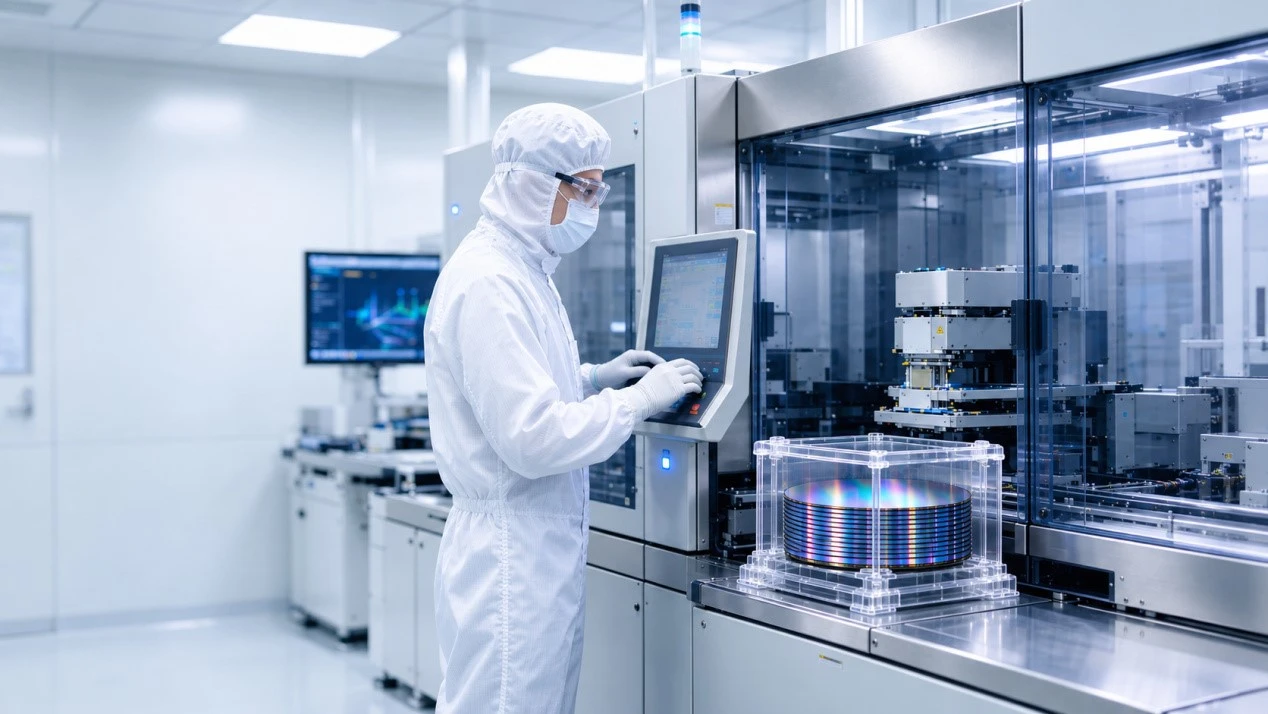
01.Wafer Fabrication Cleaning Applications
Wafer fabrication involves multiple manufacturing stages, including photolithography, deposition, etching, implantation, and other process steps. Each stage has specific requirements for maintaining the cleanliness of the manufacturing environment and controlling potential contamination sources.
Cleanroom consumables support designated cleaning and maintenance activities around these processes. Their intended use should be established before selecting a material or product configuration.
Equipment Surface Cleaning and Maintenance
Equipment exteriors, designated maintenance surfaces, and approved work areas may require routine cleaning under the facility's documented procedures. Suitable cleanroom wipes should be evaluated for their particle and lint performance, material compatibility, and resistance to the intended cleaning agent.
Cleaning inside process equipment or near exposed wafers requires additional attention to equipment-specific procedures and contamination-control requirements.
Workstation and Maintenance Bench Cleaning
Maintenance benches, tool staging areas, and other designated work surfaces may require wipes that can remove compatible residues without introducing unnecessary particles or fibers.
The selected material should suit the surface, cleaning method, and environmental requirements. A product used for general maintenance should not automatically be assumed suitable for more contamination-sensitive areas.
Precision Cleaning of Small Areas
Narrow gaps, fixtures, corners, and other difficult-to-reach areas may require precision cleaning swabs instead of conventional wipes.
Swab tip materials, shapes, dimensions, and handle construction should be evaluated according to accessibility, surface compatibility, and the risk of leaving fibers or other residues.
Personnel and Material Handling
Personnel garments and gloves form part of a facility's contamination-control practices. Suitable products should be selected according to gowning procedures, handling requirements, cleanliness specifications, and any applicable electrostatic-control measures.
Sticky rollers may also be used for designated particle-removal tasks on compatible surfaces or garments when permitted by the facility's standard operating procedures.
An Important Distinction: Wafer Cleaning vs. Cleanroom Wiping
Cleanroom wiping products are not a substitute for a qualified wafer-cleaning process. Direct wafer-surface cleaning generally requires process-specific methods, equipment, and controls. A general-purpose cleanroom wipe should not be used directly on an exposed wafer unless the material and wiping method have been explicitly approved and qualified for that application.
For wafer fabrication facilities, cleanroom consumables should be selected according to their designated role in the manufacturing and maintenance workflow.
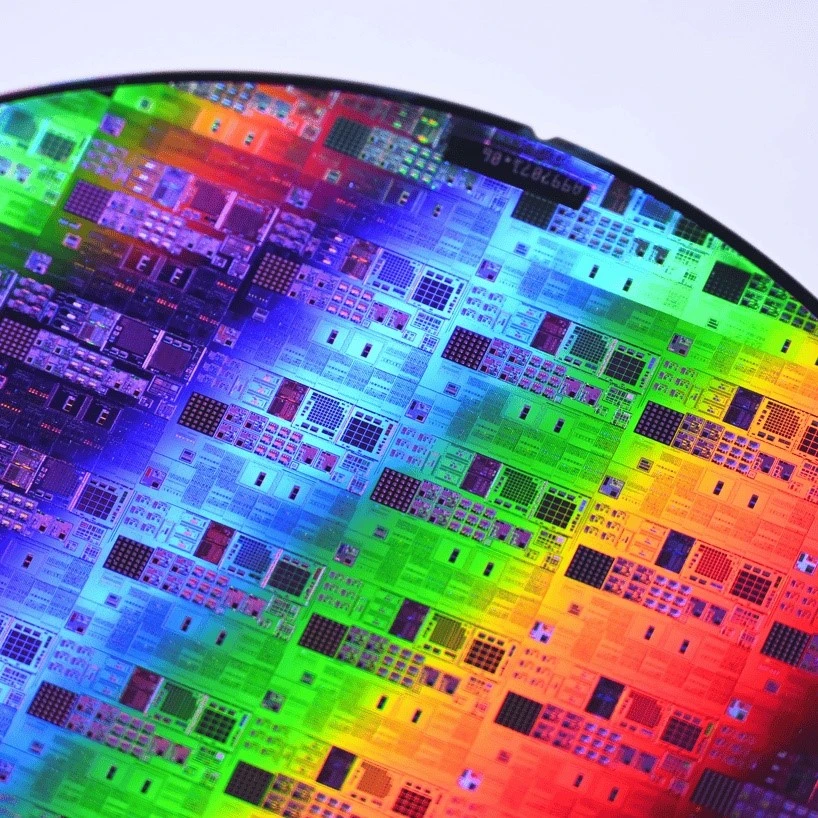
02. Wafer Fabrication Cleaning Challenges
The challenges associated with wafer fabrication extend beyond visible dirt. Product selection should consider the types of contamination that matter to the process and the potential effects of the cleaning material itself.
Particle and Fiber Contamination
Particles and loose fibers may be introduced by consumables, personnel, tools, or handling activities. In sensitive manufacturing areas, the particle-release and lint performance of wipes and swabs should be supported by relevant test data.
Material composition alone does not establish cleanliness performance. Construction, edge treatment, manufacturing controls, packaging, and handling can all influence product suitability.
Chemical Residues and Surface Compatibility
Cleaning agents may interact differently with metals, polymers, coated surfaces, and other equipment materials. Residues from an unsuitable wipe or incompatible cleaning solution may create additional contamination concerns.
Before selecting a product, verify compatibility with the substrate and the intended cleaning chemistry. Where relevant to the application, request supporting data for extractable or non-volatile residues and ionic contamination.
Static-Sensitive Equipment and Components
Some electronics manufacturing operations require controls for electrostatic discharge (ESD). In these areas, the electrical properties of gloves, garments, wipes, and other consumables may be relevant to the selection process.
Do not assume that a product is ESD-safe simply because it is designed for cleanroom use. Verify the applicable electrical specifications and confirm suitability for the intended process.
Cleaning Difficult-to-Reach Areas
Fixtures, narrow equipment gaps, and small accessible surfaces may be difficult to clean consistently with a folded wipe.
Appropriately shaped swabs can help reach designated areas, provided that the tip material, dimensions, and cleaning method are compatible with the surface and contamination-control requirements.
Cross-Contamination Between Areas
A consumable suitable for one production area may not be acceptable in another. Moving the same cleaning materials between zones without appropriate controls may introduce contaminants or compromise established cleaning procedures.
Facilities should define product usage, storage, transfer, and disposal rules according to their operational controls.
03. Cleanroom Environment Requirements
Selecting cleanroom consumables requires a defined specification for the intended environment. ISO 14644-18:2023 provides guidance for assessing consumables according to product and process requirements, cleanliness attributes, and functional performance properties.
For wafer fabrication, the following factors should be assessed before procurement.
Cleanroom Classification and Intended Use
Identify the required cleanroom classification and the applicable contamination-control criteria for the specific production area.
Do not select a product solely because a general product description mentions cleanroom use. Verify that the available cleanliness data and technical documentation are appropriate for the intended application.
Particle, Lint, and Residue Performance
Review applicable test data for particle release, linting, and other cleanliness attributes relevant to the task.
Where the process is sensitive to chemical or ionic contamination, determine whether extractables, non-volatile residues, or ionic contamination data are also required.
Check the reported test method, test conditions, units, and results rather than comparing products solely by marketing descriptions.
Chemical Compatibility
Confirm compatibility among the wiping material, cleaning agent, and surface. This is particularly important when using solvents or other process-compatible cleaning formulations.
The fact that a wipe absorbs liquid does not demonstrate that it is compatible with every solvent or that it will leave an acceptable residue level.
Electrostatic-Control Requirements
Determine whether ESD-related properties are required for the intended operation. If they are, obtain relevant product data and follow the facility's electrostatic-control procedures.
Cleanliness and electrostatic performance are different considerations; both should be evaluated when the process requires them.
Packaging and Material Transfer
Packaging should support the site's procedures for storing and introducing consumables into controlled environments.
Review the packaging format, product protection, dispensing method, and any requirements for transferring materials between cleanroom zones.
Personnel Gowning Requirements
Gloves and garments should meet the facility's gowning and handling requirements. Consider material properties, construction, fit, particle-release performance, and compatibility with the working environment.
Where specific protection or electrostatic-control properties are required, verify them independently rather than inferring performance from the product category.
04. Recommended Cleanroom Product Selection for Wafer Fabrication
Different tasks call for different consumables. The following matrix can help procurement teams and process engineers identify the product categories that warrant evaluation.
|
Application |
Product category |
Key selection criteria |
|
Approved equipment and workstation wiping |
Cleanroom Wipes |
Material composition, edge treatment, dimensions, particle and lint data, absorbency, and chemical compatibility |
|
Targeted cleaning of accessible narrow areas |
Cleanroom Swabs |
Tip material, tip geometry, handle construction, dimensions, and applicable cleanliness data |
|
Hand protection during controlled operations |
Cleanroom Gloves |
Material, size, cleanliness requirements, chemical compatibility where relevant, and verified ESD properties if required |
|
Personnel gowning |
Cleanroom Garments |
Fabric composition, garment construction, fit, particle-release performance, and applicable ESD properties |
|
Designated particle removal |
Cleanroom Sticky Rollers |
Roller material, adhesive characteristics, surface compatibility, packaging, and approved method of use |
How to Choose a Suitable Cleanroom Wipe
When evaluating cleanroom wipes for wafer fabrication support, consider the following points:
- Material composition: Determine whether the wipe material suits the surface and cleaning application.
- Particle and lint performance: Review test data relevant to the cleanliness requirements of the intended area.
- Edge construction: Assess whether the wipe's edge treatment is suitable for the task.
- Chemical compatibility: Verify compatibility with the intended cleaning agent and substrate.
- Absorbency and strength: Consider liquid pickup, durability, and the potential for material breakdown during use.
- Packaging: Check whether the packaging supports the facility's handling and transfer procedures.
When Should You Consider Cleanroom Swabs?
Swabs are appropriate candidates for evaluation when a cleaning task involves a small, accessible area that is difficult to reach with a conventional wipe.
The selection should consider tip material, tip shape, dimensions, handle design, and the surface being cleaned. Swabs should only be used where the cleaning method and product are approved for that specific task.
How Should Gloves and Garments Be Selected?
Gloves and garments should be matched to the facility's gowning procedures and operational requirements.
Relevant considerations may include cleanliness performance, material properties, fit, durability, handling, and ESD requirements where applicable. Verify product documentation before assuming that a particular glove or garment meets a specified cleanroom or electrostatic-control requirement.
05. WestonWiper Solutions for Wafer Fabrication Environments
WestonWiper offers a range of cleanroom consumables that can be evaluated for different cleaning, maintenance, and personnel-control applications. Product selection should be based on the requirements of each task rather than assuming that one consumable is suitable for every wafer fabrication area.
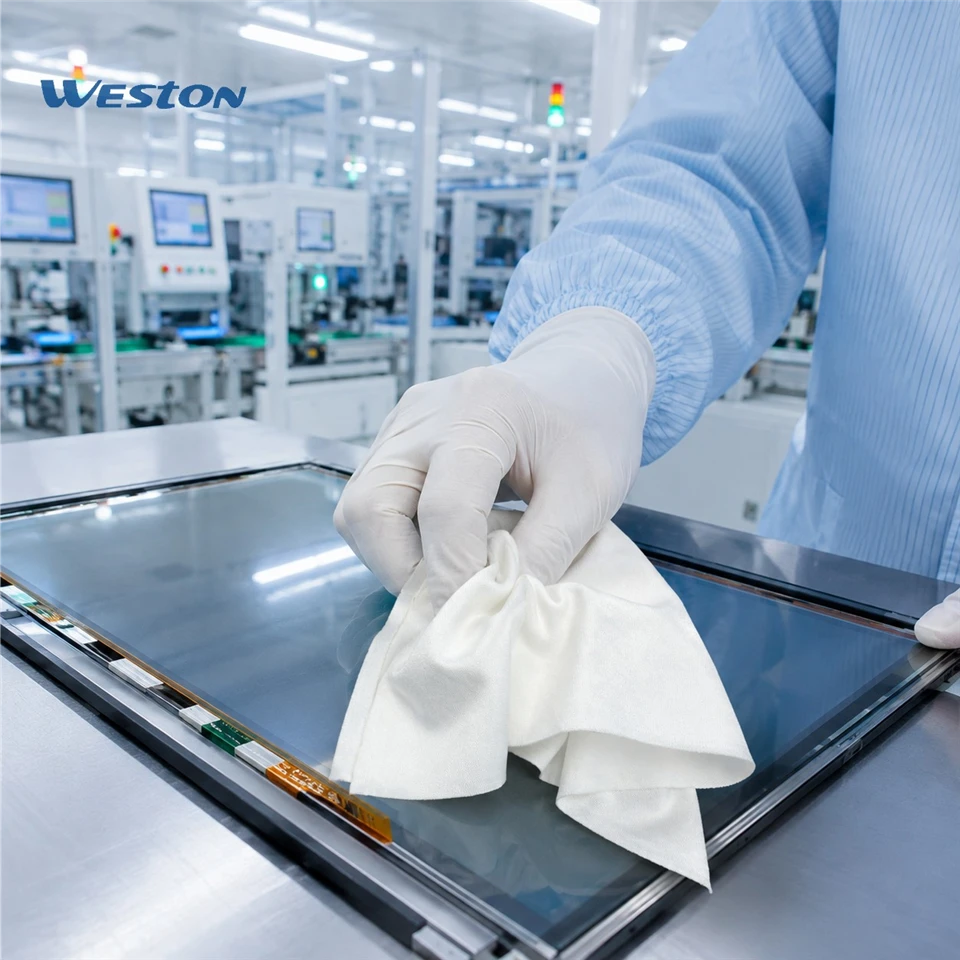
Cleanroom Wipes
Cleanroom wipes can be evaluated for approved equipment-surface maintenance, designated work areas, and other compatible wiping tasks.
Relevant selection factors include material composition, dimensions, edge treatment, particle and lint performance, and compatibility with the intended cleaning agent.
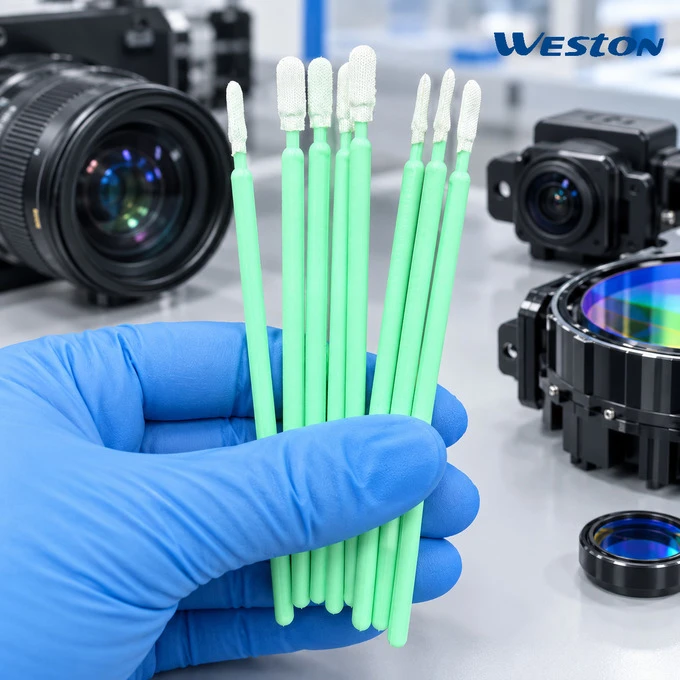
Cleanroom Swabs
Cleanroom swabs can be considered for targeted cleaning of accessible small surfaces and narrow areas where a conventional wipe may be unsuitable.
Selection depends on tip material, shape, dimensions, handle construction, and the task-specific cleanliness requirements.

Cleanroom Gloves
Cleanroom gloves support hand protection and personnel contamination-control procedures during designated manufacturing and maintenance activities.
Select the glove material and configuration according to the required handling properties, cleanliness specifications, chemical compatibility, and any applicable ESD requirements.

Cleanroom Garments
Cleanroom garments support personnel gowning procedures in controlled manufacturing environments.
Product selection should consider garment design, fabric composition, construction, particle-release performance, and the requirements of the facility's gowning programme.
Product Selection Support
When evaluating products for wafer fabrication, provide the following information where possible:
- Intended cleanroom classification and application area.
- Surface, equipment, or component to be cleaned.
- Type of contamination or residue to be controlled.
- Cleaning agent and material-compatibility requirements.
- Relevant particle, lint, chemical, or ESD specifications.
- Packaging and handling requirements.
This information provides a clearer basis for identifying relevant product options and determining which technical documents or further evaluations are necessary.
06. Technical Specifications for Wafer Fabrication Consumables
Technical specifications help determine whether a product is suitable for the intended application. Actual values must be verified against the current datasheet and supporting test documentation for the specific product model.
|
Product category |
Specifications to review |
Supporting information to request where applicable |
|
Cleanroom Wipes |
Material composition, basis weight, dimensions, edge construction, absorbency, particle release, and lint performance |
Product datasheet, cleanliness test reports, and chemical-compatibility information |
|
Cleanroom Swabs |
Tip material, tip shape, tip dimensions, handle material, total length, and cleanliness performance |
Dimensional specifications and applicable particle or residue test data |
|
Cleanroom Gloves |
Material, size, length, thickness where specified, powder status, and electrical properties if required |
Product datasheet, relevant cleanliness data, and ESD test results where applicable |
|
Cleanroom Garments |
Fabric composition, garment design, size range, construction, and particle-release performance |
Product specifications, applicable test results, and handling or packaging information |
|
Cleanroom Sticky Rollers |
Roller dimensions, roller material, adhesive characteristics, and intended application |
Product datasheet and relevant information about adhesive integrity, residue, and surface compatibility |
Documentation Checklist Before Procurement
Before approving a product for a wafer fabrication application, confirm that its documentation addresses the relevant requirements.
- Product identification: Model number, material, dimensions, and packaging configuration.
- Cleanliness performance: Applicable particle, lint, or residue test results, including the test method and conditions.
- Compatibility: Suitability for the intended substrate and cleaning agent, supported by relevant product information.
- ESD performance: Applicable electrical specifications and test results when electrostatic control is required.
- Batch and quality information: Available quality-control records, lot identification, and traceability information as appropriate to the purchasing requirements.
- Intended-use limitations: Any restrictions concerning surface contact, cleaning agents, operating environment, or handling procedures.
A stated product specification should not be interpreted as evidence of compliance with every cleanroom classification or manufacturing process. Confirm the suitability of the actual product and its documentation before introducing it into a controlled environment.
Frequently Asked Questions
Q: Can cleanroom wipes be used directly on silicon wafers?
A: Not automatically. Direct wafer-surface cleaning is governed by the fab's approved process, equipment, and contamination-control requirements. A cleanroom wipe should only be used on an exposed wafer if the specific product and cleaning method have been explicitly approved and qualified for that application.
Q: Which cleanroom wipes are suitable for wafer fabrication?
A: There is no single wipe suitable for every wafer fabrication task. Selection depends on the intended surface, contamination concern, cleanroom requirements, material compatibility, and relevant particle or lint performance data. Review the specifications of the actual product before selecting it.
Q: Do all cleanroom gloves provide ESD protection?
A: No. Cleanroom suitability and electrostatic-control performance are separate properties. Where ESD control is required, verify the glove's applicable electrical specifications and supporting test data.
Q: What technical documents should buyers request?
A: Depending on the application, buyers may need a product datasheet, particle and lint test reports, chemical-compatibility information, relevant residue or ionic contamination data, and ESD test results. Batch identification and quality-control records may also be required by the facility's purchasing procedures.
Q: Can sticky rollers be used throughout a wafer fabrication cleanroom?
A: Not necessarily. Their use depends on the roller's design, adhesive characteristics, surface compatibility, contamination risks, and the site's approved cleaning procedures. Confirm that the specific roller is suitable for the designated area before use.
Q: How can we compare different cleanroom consumables?
A: Start with a defined application and a consistent specification checklist. Compare relevant test methods, measured performance, materials, dimensions, packaging, and compatibility rather than relying only on product descriptions or general cleanliness claims.
Technical Specifications & Quality Control
Weston Wiper cleanroom products are specified and controlled around the parameters that matter in wafer fabrication: particle release, fiber release, ionic contamination, non-volatile residue, solvent compatibility and packaging cleanliness.
|
Specification |
Why It Matters in Wafer Fabrication |
|
Material |
Continuous-filament polyester, poly-cellulose, microfiber and custom substrates |
|
Edge Treatment |
Sealed, laser-sealed or ultrasonic-sealed edges help reduce fiber release |
|
Particle Release |
Supports low-particle cleaning in critical wafer-adjacent areas |
|
Fiber Release |
Helps reduce fiber-related defects and equipment contamination |
|
Ionic Extractables |
Low-ion materials support electrical and surface reliability requirements |
|
NVR |
Low non-volatile residue helps reduce haze and surface contamination |
|
Absorbency |
Supports dry wiping, solvent cleaning and spill response |
|
Chemical Compatibility |
Verified for IPA, DI water and specified fab cleaning chemistries |
|
ESD Performance |
ESD-aware options for static-sensitive process and handling areas |
|
Packaging |
Cleanroom packaging helps protect cleanliness before use |
|
Lot Traceability |
Lot-level documentation supports incoming inspection and qualification |
Discuss Your Wafer Fabrication Requirements
Selecting suitable cleanroom consumables starts with understanding the specific process, cleaning task, and technical requirements of your facility.
Contact WestonWiper with your application details and required specifications to discuss relevant product options and available technical information.