Dry Cleaning vs. Wet Cleaning for Food Packaging Equipment: What Is the Difference?
Choosing how to clean food packaging equipment is not simply a choice between "dry" and "wet." The right method depends on the food being handled, the type of residue, the equipment's design, and the sanitation program used at the facility.
Dry cleaning is often preferred in production areas where adding moisture could create new risks. Wet cleaning may be needed for certain sticky, greasy, or otherwise difficult soils, but it must be controlled and followed by the required sanitation, drying, and verification steps. Most importantly, removing visible soil is not always the same as reducing microorganisms to an acceptable level.
What Do Dry Cleaning and Wet Cleaning Mean?
Dry cleaning removes soil without adding water
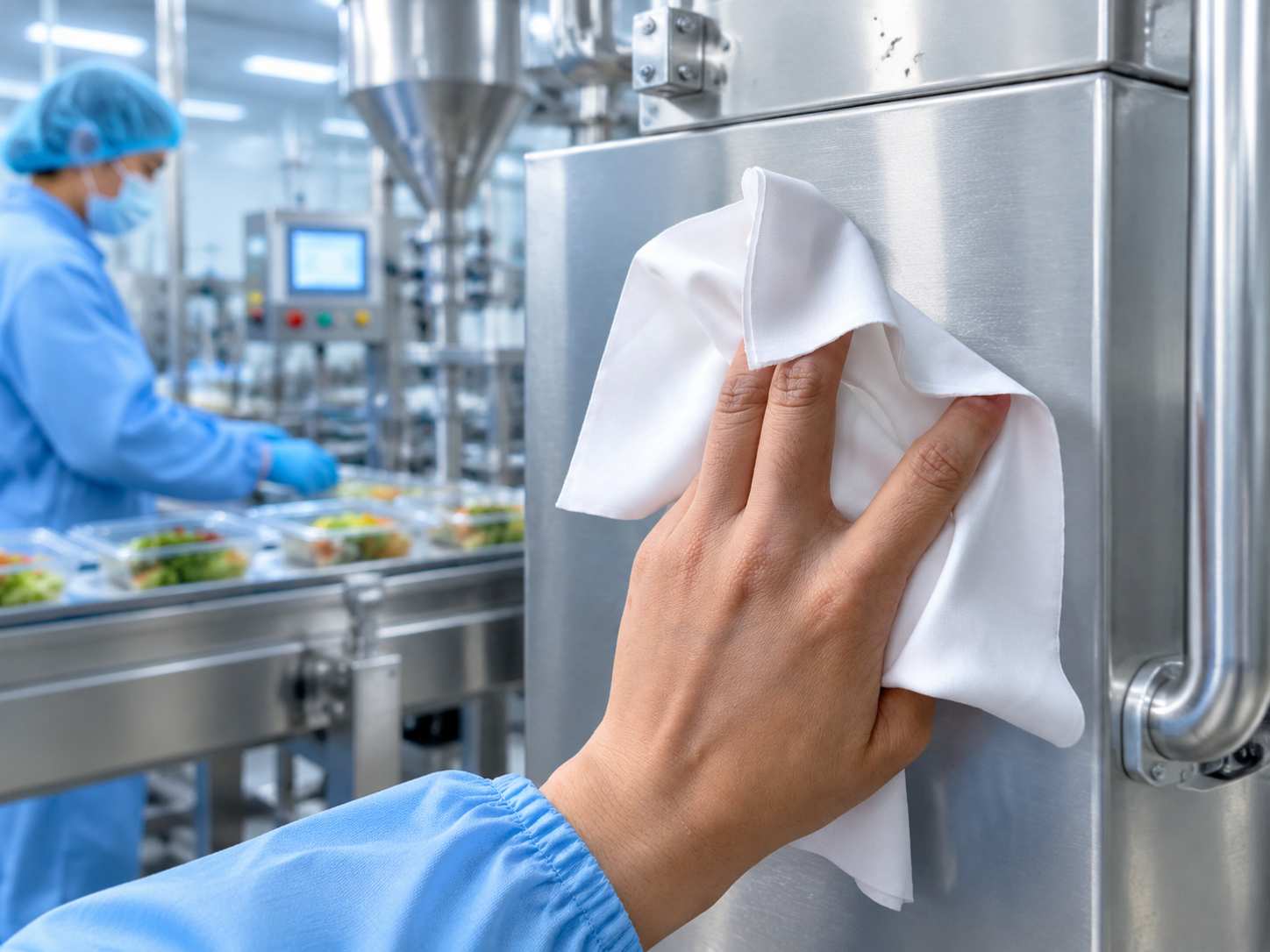
Dry cleaning uses tools and actions such as vacuuming, scraping, brushing, sweeping, and wiping to remove residues without water. It can be useful for dry powders, crumbs, and loose debris, as well as for equipment areas that are not designed to be washed.
The aim is to collect and remove the soil-not to spread it. For example, vacuuming may be more suitable than blowing dust around with compressed air, depending on the facility's procedures and equipment. Brushes, scrapers, and wipes should be dedicated to the appropriate zones and managed so that residues are not transferred from one surface to another.
Dry cleaning should not automatically be described as sanitizing. A dry cloth can pick up visible material, but wiping alone does not prove that pathogens have been eliminated.
Wet cleaning uses water and cleaning agents under control
Wet cleaning uses water, often together with detergent, to loosen and remove soil. Depending on the approved procedure, it may include rinsing and a separate sanitizing step. It can be appropriate where soil adheres to surfaces or where the equipment and sanitation program call for a wet process.
Cleaning and sanitizing are different steps. Cleaning removes food residue, grease, dirt, and other unwanted matter. Sanitizing is a treatment applied to an already-cleaned surface to reduce microorganisms as required by the applicable procedure. A surface that looks clean is not necessarily sanitized.
Why Does the Choice Matter on Food Packaging Equipment?
Water can create risk in dry-processing environments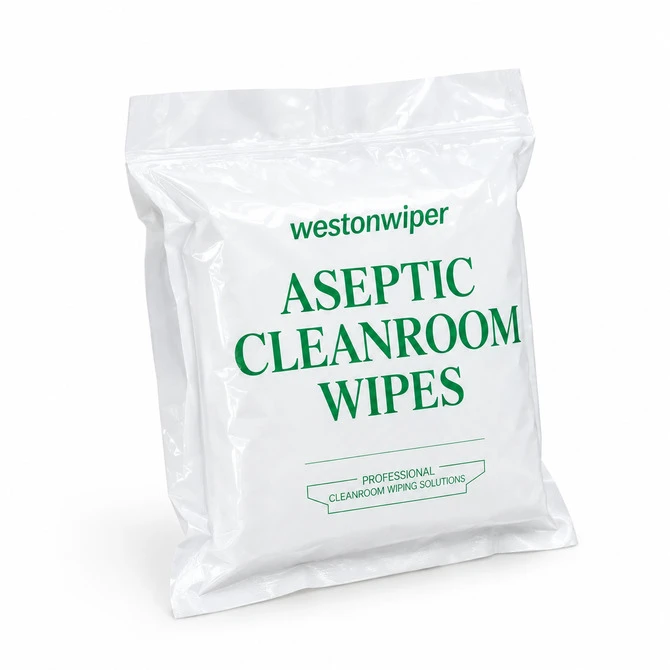
In a dry production area, unintended moisture can create conditions that support the growth or transfer of environmental pathogens. Water may also spread contamination into equipment joints or adjacent areas, or remain trapped in places that are difficult to inspect.
The FDA's draft guidance for low-moisture ready-to-eat foods recommends using dry-cleaning techniques to the extent practical. When water is introduced, the guidance recommends minimizing its use, controlling its spread, and removing it through prompt, thorough drying. This guidance is specifically about low-moisture ready-to-eat foods; it is not a universal rule for every food plant or packaging line. FDA also states that guidance documents generally present recommendations rather than legally enforceable responsibilities.
Packaging lines include different kinds of surfaces
A packaging line may include product-contact belts, filling or sealing parts, machine guards, frames, sensors, motors, and electrical enclosures. These areas do not necessarily share the same cleaning requirements. A method suitable for an external frame may be unsuitable for an electrical component or a product-contact surface.
Before choosing a method, identify the surface and its role in the process. Follow the equipment manufacturer's instructions and the facility's written sanitation procedures. Do not assume that because one part of a machine can be wiped, every internal or food-contact part can be cleaned in the same way.
The wrong method can spread soil or extend downtime
Dry methods can be ineffective if they simply move powder or allergens to nearby surfaces. Wet methods can cause problems if water enters equipment that is not designed for it, or if liquid and residues are not fully removed. In either case, poor tool control can transfer soil from a dirty area to a cleaner one.
A reliable sanitation program considers how residues move, where moisture can collect, how parts are accessed, and what evidence is needed before production resumes.
How Should You Choose Between Dry and Wet Cleaning?
Start with the food and production environment
Determine whether the product and production area are managed as a low-moisture environment, and whether moisture presents a particular microbiological risk. Do not apply recommendations written for one food category to every packaging operation without reviewing the facility's hazards, local requirements, and sanitation plan.
Match the method to the type of soil
Loose powders and crumbs may be candidates for vacuuming, scraping, brushing, or wiping, provided those methods are appropriate for the equipment and facility. Grease, sticky residues, or wet soils may require a controlled wet-cleaning procedure.
Allergen control needs its own risk-based procedure and verification. A quick dry wipe should not be assumed to remove allergens adequately. The facility should establish how the relevant soil is removed and how the result is checked.
Check equipment design and water tolerance
Review the machine manual, disassembly instructions, seals, electrical components, drainage, and access to hidden surfaces. Some equipment is designed for clean-in-place (CIP) procedures. Other parts may need to be removed and cleaned in a separate clean-out-of-place (COP) area.
The FDA draft guidance recommends that removable parts taken out of a dry production environment be cleaned and, when appropriate, sanitized in a designated area, then thoroughly dried before being returned. Equipment design and the facility's validated procedure should determine the actual method.
Distinguish routine cleaning from pathogen response
Routine removal of production soil is not the same as corrective action after a suspected or confirmed pathogen contamination event. The FDA draft guidance notes limitations of relying only on dry cleaning without a sanitizing treatment to effectively eliminate pathogens. A contamination event should be handled under the facility's food safety plan and applicable requirements, including appropriate cleaning, sanitizing, investigation, and verification-not by assuming that a routine wipe-down is sufficient.
What Does a Good Dry-Cleaning Procedure Look Like?
Prepare the line and prevent cross-contamination
Follow the facility's shutdown and lockout procedures. Protect or remove exposed product and packaging materials as required. Identify the work area and the tools assigned to it. Work in a sequence that avoids carrying soil from dirtier areas to cleaner ones, and use methods that do not unnecessarily disperse dust.
Remove dry soil with suitable tools
Use the tools specified by the sanitation procedure. These may include an appropriate vacuum, scraper, brush, or wipe. Choose wipes based on the surface, residue, particle and lint performance, and compatibility with the cleaning process. Fold or replace a wipe so that a soiled face is not repeatedly used across multiple surfaces.
A wipe is one tool in the process. Its ability to pick up particles does not by itself establish that a surface has been sanitized or that a food-contact requirement has been met.
Inspect, verify, and document
Inspect the equipment after cleaning. Depending on the facility's risk assessment, verification may include visual checks, records, environmental monitoring, or other methods in the sanitation program. Document the work and release the line only when the required conditions have been met.
What Does a Controlled Wet-Cleaning Procedure Look Like?
Remove loose soil before applying water
Where the procedure allows, remove loose debris first. This can reduce the amount of soil that water may carry into seams, adjacent areas, or parts that are difficult to dry.
Follow the approved cleaning and sanitizing steps
Use the sequence, chemicals, and application method specified by the facility's procedure, product label, equipment instructions, and applicable requirements. Rinsing may be required in some procedures. Sanitizer concentration and contact time must come from the applicable label and approved process; there is no single setting suitable for every machine and soil.
Control runoff and dry the equipment completely
Limit water to the intended area and prevent runoff into dry zones or electrical components. After the wet process, remove moisture thoroughly and inspect hard-to-reach areas for standing water or condensation. Confirm that the equipment is dry and meets the facility's release criteria before restarting production.
Which Method Fits Common Packaging-Line Situations?
Dry powder or crumbs on a dry line
A dry method may be the first option to assess when the line and sanitation program are designed to control moisture. Vacuuming, scraping, brushing, or wiping can remove loose residues. The facility still needs to verify that the method is effective for the relevant soil and risk; dry removal should not be presented as pathogen elimination.
Grease or sticky residue on a water-tolerant component
A controlled wet-cleaning method may be more suitable when residue adheres to a component and the equipment is designed for wet cleaning. Follow the approved detergent and sanitizing procedure, control runoff, and dry the equipment as required.
Dust around sensors, motors, or electrical enclosures
Follow the equipment manufacturer's instructions and use a method approved for the component. Do not apply liquid or a pre-saturated wipe to an area unless the equipment instructions and facility procedure permit it.
Suspected contamination on a food-contact surface
Stop and involve the responsible food safety or sanitation team. Follow the facility's corrective-action process, including appropriate cleaning, sanitizing, investigation, and verification. A surface that looks clean-or has been wiped once-should not be treated as automatically ready for production.
How Should You Choose Wipes for the Task?
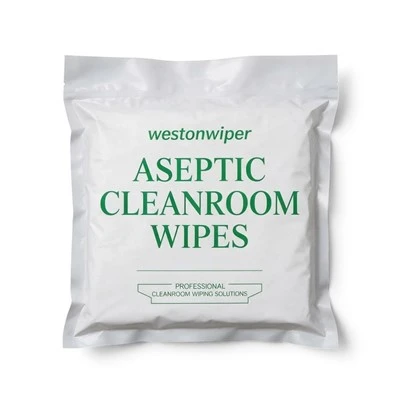
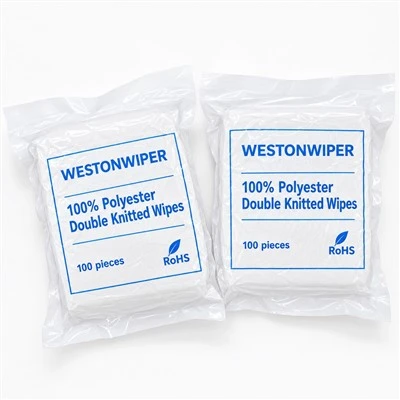
Wipe selection should be based on the job, not just the product name. Consider the surface material, residue, particle and lint performance, edge construction, packaging, chemical compatibility, and the facility's rules for use and disposal. Westonwiper's cleanroom-wiper range includes Aseptic Cleanroom Wipes and polyester options described with low-particle or low-lint characteristics. Teams comparing Cleaning Wipes for Food Manufacturing should separately confirm whether a specific wipe is suitable for the intended food-contact surface and cleaning chemistry. Cleanroom positioning or low-lint performance alone does not establish food-contact compliance, antimicrobial activity, or suitability as a substitute for a sanitation procedure.
Common Mistakes to Avoid
Assuming dry cleaning kills pathogens
Dry cleaning can remove soil, but it should not be treated as an effective pathogen-kill step unless the full procedure has been validated for that purpose.
Using water on equipment that is not designed for wet cleaning
Water may damage components, remain trapped, or create moisture-related risks. Check the machine design and approved procedure first.
Returning equipment before it is fully dry
Hidden moisture can remain after visible surfaces appear dry. Follow the facility's drying and inspection criteria before returning parts to a dry area or restarting the line.
Reusing a contaminated wipe across multiple zones
A wipe that has collected soil can transfer it elsewhere. Manage wipes by zone and task, and replace or refold them as specified in the procedure.
Treating a cleanroom-wipe specification as proof of food-contact approval
Particle, lint, material, or cleanroom-related information is useful for evaluating a wipe, but it does not answer every food-safety or regulatory question. Confirm documentation for the exact product and intended use.
Frequently Asked Questions
Is dry cleaning safer than wet cleaning for food packaging machines?
There is no single answer for every machine or plant. Dry cleaning is often favored where moisture must be controlled, particularly in dry-processing environments. Wet cleaning may be appropriate when the soil, equipment design, risk assessment, or approved sanitation procedure calls for it. The facility's food safety plan and equipment instructions should guide the decision.
Does wiping with a cleanroom wipe sanitize food-contact equipment?
Not automatically. Wiping may remove soil, and the wipe's particle or lint properties may matter for the surface, but those features do not demonstrate sanitizing efficacy or food-contact suitability. Check the procedure and the product documentation separately.
When should a packaging machine be wet cleaned?
Use wet cleaning when the residue and risk assessment call for it and the equipment is designed for the process. Follow the approved cleaning and sanitizing steps, control water, dry the machine fully, and verify the result as required.
Can I use a pre-saturated IPA wipe on food packaging equipment?
Do not decide from the IPA percentage or the words "cleanroom wipe" alone. Check the target surface, food-contact requirements, chemical label, equipment instructions, and facility procedure. A pre-saturated wipe should not be assumed to replace the required cleaning and sanitizing steps.